Non-commutative variables in clinical practice: the order of information matters


Non-commutative variables in clinical practice: the order of information matters
Abstract
In complex clinical systems (orofacial pain, TMD, interfering neurological conditions), diagnostic outcome does not depend solely on which data are collected, but on the order and the time with which informational blocks are acquired and integrated. This chapter introduces a minimal formalization of diagnostic non-commutativity: the idea that a diagnosis may change when two informational blocks are applied in reverse order, even when both are correct within their own local domain.
We define diagnosis as the output of a temporal sequence of informational acts, and introduce an operational notation , where represents the interval during which the system’s state may transform (adaptation, compensation, chronification, interference). In a “commutable” clinical process, order is neutral; in complex systems this neutrality often fails, and the difference between and becomes an operational indicator of diagnostic instability.
Through the paradigmatic case of “Mary Poppins” (Hemimasticatory Spasm), we show how two locally coherent diagnostic contexts (dental and neurological) may generate a multi-year interpretative stasis when the initial block is insufficiently discriminative. Non-commutativity is not interpreted as an error of the individual specialist, but as an emergent property of the diagnostic process when a state metric capable of compressing decision time is lacking. This framework prepares the ground for the next chapter (encrypted signal / clinical phase) and for the introduction of the Index.
1. Premise: why order is a clinical variable
In a “classical” idealization, diagnosis is treated as a result that depends on data, while the order of acquisition is considered secondary. In real clinical practice this assumption often fails, especially when:
- the presentation is in an overlap phase (multiple etiologies compatible with the same pattern);
- the discriminative sensitivity of tests depends on time and on the system’s state;
- the pathway is multidisciplinary and composed of heterogeneous informational “blocks”.
In such cases, the diagnostic process becomes intrinsically path-dependent: there is no single equivalent “snapshot”, but an observational history.
2. Operational definition: informational blocks and temporal sequence
Let denote the diagnostic output produced by the application of a sequence of informational acts (tests + interpretation). Consider two blocks:
- = standard dental block (local reading; criteria and tests oriented to the TMD context)
- = neurophysiological/systemic block (higher-level reading; neuro-gnathological differential integration)
We introduce the notation:
where indicates that between and there is a time during which the system’s state may transform.
We say that the process is commutable (in the clinical sense) if, at equal temporal distance, order does not change the outcome:
In complex systems this often fails, and we observe:
This dependence of outcome on order is what we here call clinical (diagnostic) non-commutativity.
3. Time is not a neutral interval
The time separating informational blocks is not an “empty” interval: it is a space in which the clinical system may change state. In particular, may:
- increase or reduce the discriminability of a test;
- shift the patient from an overlap phase to a manifest phase;
- produce adaptation, compensation, or chronification;
- create a self-sufficient local coherence (a plausible but non-causal diagnosis).
Therefore, a “late but correct” diagnosis is not equivalent to an early diagnosis: the outcome may coincide, but the clinical process is not the same.
4. Minimal formalism: order index and commutator
To make non-commutativity measurable, we introduce an operational quantity.
4.1 Order index (distance between outcomes)
We define:
where may be:
- a distance between classes (0 if identical, 1 if different),
- a distance between probabilities (absolute difference between posteriors),
- a distance between state vectors (norm), when is introduced.
If , the process is commutable at that scale; if , an order effect emerges.
4.2 Commutator as a “signature” of the process
In conceptual (non-physical) form, we may represent informational blocks as update operators acting on a clinical state:
Non-commutativity is expressed as:
The commutator is not here a “quantum” object of the patient, but a compact way of saying: order changes the reconstructed state.
5. Paradigmatic example: “Mary Poppins” and the encrypted message
The clinical case of “Mary Poppins” (Hemimasticatory Spasm) makes it evident that two diagnostic contexts may be locally coherent and globally incompatible.
To fix the point operationally, let:
- = dental block (coherence of the dental context )
- = neurophysiological block (coherence of the neurological context )
The typical historical sequence is:
with of years
During , the local coherence of may support many plausible assertions without being causally correct. Diagnosis stabilizes late not because “data were missing”, but because the initial order was insufficiently discriminative during overlap phases.
-
 Figure 1: A purely descriptive example. = dental block (coherence of the dental context )
 -
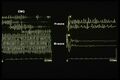 Figure 2: = neurophysiological block (coherence of the neurological context )


The counterfactual inversion clarifies the concept:
that is: an initial neurophysiological reading could have oriented the dental reading as a consequence rather than as a cause.
5.1 Why “encrypted”
The point that opens the next chapter is that does not merely add “more data”: it introduces the need to decode an output. In some trigeminal conditions, information is present but not readable with standard dental interpretative keys.
In the “Mary Poppins” case, the physiopathological key is ephaptic transmission: ectopic activity and lateral spread in a focally demyelinated nerve. The system produces a real signal, but the local reading interprets it with an inadequate grammar.
6. Clinical implication: non-commutativity as an indicator of instability
Diagnostic non-commutativity is not (only) a theoretical issue: it is an operational signal that the process is working in a high-risk overlap region, where:
- the order of informational blocks changes the outcome;
- late diagnosis is not equivalent to early diagnosis;
- local coherence does not guarantee causality;
- the system is vulnerable to delays, deviations, and false closures.
In the absence of a state metric, the pathway remains intrinsically path-dependent.
7. Bridge toward the Index
If outcome depends on order and time, then a criterion is needed that makes discriminative information available early and reduces . From this need arises the Index, conceived not as a classification but as a state metric, capable of representing:
- system configuration,
- context dependence,
- order effects,
- and (subsequently) clinical phase as a transfer variable.
- ↑ Norman G, Eva K. Diagnostic error and clinical reasoning. Med Educ. 2010;44(1):94–100.
- ↑ Graber ML, Franklin N, Gordon R. Diagnostic error in internal medicine. Arch Intern Med. 2005;165(13):1493–9.
- ↑ Hogarth RM, Einhorn HJ. Order effects in belief updating. Cogn Psychol. 1992;24(1):1–55.
- ↑ Elstein AS, Schwarz A. Clinical problem solving and diagnostic decision making. BMJ. 2002;324:729–32.
- ↑ Sturmberg JP, Martin CM. Complexity and health – yesterday’s traditions, tomorrow’s future. J Eval Clin Pract. 2009;15(3):543–8.
- ↑ Plsek PE, Greenhalgh T. Complexity science: The challenge of complexity in health care. BMJ. 2001;323:625–8.
- ↑ Trueblood JS, Busemeyer JR. A quantum probability account of order effects in inference. Cogn Sci. 2011;35(8):1518–52.
- ↑ Khrennikov A. Contextual approach to quantum formalism. Springer; 2009.
- ↑ Cruccu G, Truini A. Refractory trigeminal neuralgia. Neurology. 2013;81(7):640–8.
- ↑ Sessle BJ. Orofacial pain: models, mechanisms, and clinical correlates. J Oral Rehabil. 2014;41(4):242–52.
- ↑ Nielsen VK. Pathophysiology of hemifacial spasm: I. Ephaptic transmission. Neurology. 1984;34:418–26.
- ↑ Thompson PD, Carroll WM. Hemimasticatory spasm: a peripheral paroxysmal cranial neuropathy? J Neurol Neurosurg Psychiatry. 1983;46:274–6.