Introduction Abstract: differenze tra le versioni
Creata pagina con "{{main menu |link to German= Buchindex |link to Spanish= Índice del libro |link to French= Index du livre |link to Italian= Indice libro | no title = 1 }} <div class="chapter-content"> {{ArtBy|autore=Gianni Frisardi}} == Abstract (Open Access) == Il sistema masticatorio (denti, occlusione, muscoli, articolazioni, afferenze periferiche e controllo centrale) non si comporta come un semplice meccanismo biomeccanico, ma come un '''sistema complesso''' capace di adattamen..." |
Nessun oggetto della modifica |
||
| (14 versioni intermedie di uno stesso utente non sono mostrate) | |||
| Riga 1: | Riga 1: | ||
{{main menu | |||
|link to German= | <div class="abstract-page"> | ||
|link to Spanish= | </div> | ||
|link to French= | {{main menu | ||
|link to Italian= | |link to German= Hauptseite | ||
| no title = | |link to Spanish= Pàgina Principal | ||
|link to French= Page d'accueil | |||
|link to Italian= Introduzione | |||
|link to English= Introduction | |||
|no title = [insert any value to hide the page title below the navigation menu] | |||
}} | }} | ||
<div class="chapter-content"> | <div class="chapter-content"> | ||
<Center> | |||
= <big>Introduction</big> = | |||
{{ArtBy|autore=Gianni Frisardi}} | {{ArtBy|autore=Gianni Frisardi}} | ||
</Center> | |||
== Abstract == | |||
The masticatory system — including teeth, occlusion, muscles, temporomandibular joints, and central and peripheral neural control networks — cannot be adequately described as a simple biomechanical mechanism. Rather, it must be interpreted as a '''complex adaptive system''', in which function emerges from non-linear interactions among morphological, neuromuscular, and neurophysiological components. Within this framework, many clinical manifestations that appear “abnormal” according to traditional models do not represent errors or therapeutic failures, but instead constitute genuine '''signals of paradigmatic crisis''', in the sense originally described by Thomas Kuhn. | |||
- | The classical approach to the diagnosis and treatment of masticatory disorders has historically been based on predominantly morphological categories, particularly the concept of “malocclusion.” However, clinical experience and increasing experimental evidence demonstrate that occlusal form, when considered in isolation, is not a reliable predictor of function. Patients with marked occlusal discrepancies may exhibit stable neuromuscular balance, whereas individuals with morphologically “correct” occlusions may develop pain, instability, and functional relapse. For this reason, Masticationpedia proposes a conceptual shift from “malocclusions” to “'''occlusal dysmorphisms'''”, emphasizing the distinction between morphological description and functional meaning. | ||
Electrophysiological tests — including mandibular reflexes, motor evoked potentials, and the mechanical silent period — represent fundamental tools for investigating the functional level of the masticatory system. They allow objective assessment of neuromuscular symmetry, reflex control, and the integration between peripheral structures and the central nervous system. The evidence presented shows that '''functional symmetry''' can be preserved even in the presence of pronounced occlusal dysmorphisms, through adaptive neuroplastic mechanisms that stabilize the system over time. | |||
This perspective has decisive clinical implications. Masticatory rehabilitation — whether orthodontic, prosthetic, or surgical — can no longer be oriented exclusively toward achieving static occlusal stability. Instead, it must aim for '''dynamic functional stability''', verifiable through reproducible neurophysiological parameters. The absence of such integration represents one of the main causes of therapeutic failure and late relapse, often erroneously attributed to poor patient compliance. | |||
Within this framework, the OrthoNeuroGnathodontic model emerges as an integrated diagnostic-therapeutic strategy combining morphological evaluation, functional analysis, and clinical electrophysiology. This model does not merely correct form, but recognizes the central role of the nervous system in maintaining masticatory equilibrium. The adoption of measurable functional criteria thus makes it possible to overcome a reductionist approach and to align clinical practice with the principles of complex systems medicine, paving the way for more stable, predictive, and scientifically grounded treatments. | |||
== | <gallery mode="slideshow" widths="100"> | ||
File:Occlusal Centric view in open and cross bite patient.jpg|'''Figure 1a:''' Centric occlusal view of a patient with crossbite and open bite. | |||
File:Bilateral Electric Transcranial Stimulation.jpg|'''Figure 1b:''' Bilateral transcranial electrical stimulation: masseter muscle symmetry. | |||
File:Jaw Jerk .jpg|'''Figure 1c:''' Jaw jerk reflex: confirmed functional symmetry. | |||
File:Mechanic Silent Period.jpg|'''Figure 1d:''' Mechanical silent period: balanced bilateral activation. | |||
</gallery> | |||
=== | === 🧠 Three guiding questions (with essential answers) === | ||
;1️⃣ What: in what sense is the masticatory system a complex system (and not merely biomechanical)? | |||
It is a system in which morphology (teeth/occlusion) and neurophysiological control (trigeminal system and central/peripheral networks) interact non-linearly: function emerges from the integration of components, not from isolated form. | |||
;2️⃣ Why: why is “malocclusion” often an insufficient category from a functional and diagnostic standpoint? | |||
Because “malocclusion” primarily describes a morphological asymmetry, which may not correspond to dysfunction: neuromuscular adaptations can preserve symmetry and functional performance even in the presence of evident discrepancies. | |||
;3️⃣ How: how do electrophysiological tests change diagnosis and therapeutic strategy (from form to function)? | |||
They introduce measurable criteria of symmetry and neuromuscular control (reflexes, evoked potentials, silent period), enabling function-based diagnosis and guiding therapies aimed at functional stability and relapse prevention. | |||
---- | ---- | ||
<html> | |||
<div style="border:1px solid #d8d8d8; border-radius:14px; padding:18px 20px; background:#fafafa; margin:22px 0;"> | |||
<div style="font-size:20px; margin-bottom:10px;"> | |||
🔒 <b>Access to the full chapter</b> | |||
</div> | |||
<div style="font-size:18px; line-height:1.5; margin-bottom:10px;"> | |||
👤 <b>Approved users</b><br> | |||
If you already have an approved account, click on your <b>profile icon</b> and return to the <b>Book Index</b> to read the complete chapter. | |||
</div> | |||
= | <div style="font-size:18px; line-height:1.5; margin-bottom:16px;"> | ||
🔑 <b>New readers</b><br> | |||
To access the full content, you must sign in via <b>LinkedIn</b> and request approval. | |||
</div> | |||
---- | <div> | ||
<a class="hero-cta-button tooltip-trigger-expert" | |||
href="https://staging.masticationpedia.org/oauth/linkedin-login.php"> | |||
<span class="hero-action__icon hero-action__icon--linkedin"></span> | |||
<span class="hero-action__label">Apply via LinkedIn</span> | |||
</a> | |||
</div> | |||
</div> | </div> | ||
</html> | |||
<onlyinclude> | |||
{{Bib}} | |||
* {{cita libro|autore=Heft MW|autore2=Fox CH|autore3=Duncan RP|titolo=Assessing the Translation of Research and Innovation into Dental Practice|url=https://www.ncbi.nlm.nih.gov/pubmed/31590599|anno=2019|opera=JDR Clin Trans Res|DOI=10.1177/2380084419879391}} | |||
* {{cita libro|titolo=Exposure Science in the 21st Century. A Vision and a Strategy|url=https://www.ncbi.nlm.nih.gov/books/NBK206806/pdf/Bookshelf_NBK206806.pdf|editore=National Research Council, Division on Earth and Life Studies|anno=2012|ISBN=0-309-26468-5}} | |||
* {{cita libro|autore=Liu L|autore2=Li Y|titolo=The unexpected side effects and safety of therapeutic monoclonal antibodies|url=https://www.ncbi.nlm.nih.gov/pubmed/24524104|anno=2014|opera=Drugs Today|città=Barcellona|DOI=10.1358/dot.2014.50.1.2076506}} | |||
* James Frederick Ferrier. ''Institutes of Metaphysic''. 1854. (Internet Encyclopedia of Philosophy: Ferrier). | |||
* Srivastava S. {{cita libro|titolo=Verifiability is a core principle of science|url=https://www.cambridge.org/core/journals/behavioral-and-brain-sciences/article/verifiability-is-a-core-principle-of-science/D46462A598492AFDB7AFB4975A313446|opera=Behav Brain Sci|anno=2018|editore=Cambridge University Press|DOI=10.1017/S0140525X18000869}} | |||
* Evans M. {{cita libro|titolo=Measuring statistical evidence using relative belief|url=https://www.ncbi.nlm.nih.gov/pubmed/26925207|opera=Comput Struct Biotechnol J|anno=2016|DOI=10.1016/j.csbj.2015.12.001}} | |||
* Amrhein V; Greenland S; McShane B. {{cita libro|titolo=Scientists rise up against statistical significance|url=https://www.ncbi.nlm.nih.gov/pubmed/30894741|opera=Nature|anno=2019|DOI=10.1038/d41586-019-00857-9}} | |||
* Rodgers JL. {{cita libro|titolo=The epistemology of mathematical and statistical modeling: a quiet methodological revolution|url=https://www.ncbi.nlm.nih.gov/pubmed/20063905|opera=Am Psychol|anno=2010|DOI=10.1037/a0018326}} | |||
* Meehl P. ''The problem is epistemology, not statistics: replace significance tests by confidence intervals and quantify accuracy of risky numerical predictions''. 1997. | |||
* Sprenger J; Hartmann S. {{cita libro|titolo=Bayesian Philosophy of Science. Variations on a Theme by the Reverend Thomas Bayes|anno=2019|editore=Oxford University Press}} | |||
* Wasserstein RL; Schirm AL; Lazar NA. {{cita libro|titolo=Moving to a World Beyond ''p'' < 0.05|url=https://www.tandfonline.com/doi/full/10.1080/00031305.2019.1583913|opera=Am Stat|anno=2019|DOI=10.1080/00031305.2019.1583913}} | |||
* Boon M; Van Baalen S. {{cita libro|titolo=Epistemology for interdisciplinary research – shifting philosophical paradigms of science|url=https://www.ncbi.nlm.nih.gov/pmc/articles/PMC6383598/|opera=Eur J Philos Sci|anno=2019|DOI=10.1007/s13194-018-0242-4}} | |||
* Boon M. {{cita libro|titolo=An engineering paradigm in the biomedical sciences: Knowledge as epistemic tool|url=https://www.ncbi.nlm.nih.gov/pubmed/28389261|opera=Prog Biophys Mol Biol|anno=2017|DOI=10.1016/j.pbiomolbio.2017.04.001}} | |||
* Guven Y. {{cita libro|titolo=Scientific basis of dentistry|url=https://www.ncbi.nlm.nih.gov/pmc/articles/PMC5624148/|opera=J Istanb Univ Fac Den|anno=2017|DOI=10.17096/jiufd.04646}} | |||
* Smaglyuk LV; Voronkova HV; Karasiunok AY; Liakhovska AV; Solovei KO. {{cita libro|titolo=Interdisciplinary approach to diagnostics of malocclusions (review)|url=https://www.ncbi.nlm.nih.gov/pubmed/31175796|opera=Wiad Lek|anno=2019}} | |||
* Avivi-Arber L; Lee JC; Sessle BJ. Motor cortex neuroplasticity associated with dental occlusion. ''J Dent Res''. 2015;94(12):1751–1759. doi:10.1177/0022034515596345 | |||
* Avivi-Arber L; Martin R; Lee JC; Sessle BJ. The Face Sensorimotor Cortex and its Neuroplasticity in Health and Disease. ''J Dent Res''. 2019;98(11):1184–1194. doi:10.1177/0022034519865385 | |||
* Iwata K; Sessle BJ. Neural Basis of Orofacial Functions in Healt* | |||
Versione attuale delle 18:23, 29 dic 2025


Introduction
 |
Article by: Gianni Frisardi
|
Abstract
The masticatory system — including teeth, occlusion, muscles, temporomandibular joints, and central and peripheral neural control networks — cannot be adequately described as a simple biomechanical mechanism. Rather, it must be interpreted as a complex adaptive system, in which function emerges from non-linear interactions among morphological, neuromuscular, and neurophysiological components. Within this framework, many clinical manifestations that appear “abnormal” according to traditional models do not represent errors or therapeutic failures, but instead constitute genuine signals of paradigmatic crisis, in the sense originally described by Thomas Kuhn.
The classical approach to the diagnosis and treatment of masticatory disorders has historically been based on predominantly morphological categories, particularly the concept of “malocclusion.” However, clinical experience and increasing experimental evidence demonstrate that occlusal form, when considered in isolation, is not a reliable predictor of function. Patients with marked occlusal discrepancies may exhibit stable neuromuscular balance, whereas individuals with morphologically “correct” occlusions may develop pain, instability, and functional relapse. For this reason, Masticationpedia proposes a conceptual shift from “malocclusions” to “occlusal dysmorphisms”, emphasizing the distinction between morphological description and functional meaning.
Electrophysiological tests — including mandibular reflexes, motor evoked potentials, and the mechanical silent period — represent fundamental tools for investigating the functional level of the masticatory system. They allow objective assessment of neuromuscular symmetry, reflex control, and the integration between peripheral structures and the central nervous system. The evidence presented shows that functional symmetry can be preserved even in the presence of pronounced occlusal dysmorphisms, through adaptive neuroplastic mechanisms that stabilize the system over time.
This perspective has decisive clinical implications. Masticatory rehabilitation — whether orthodontic, prosthetic, or surgical — can no longer be oriented exclusively toward achieving static occlusal stability. Instead, it must aim for dynamic functional stability, verifiable through reproducible neurophysiological parameters. The absence of such integration represents one of the main causes of therapeutic failure and late relapse, often erroneously attributed to poor patient compliance.
Within this framework, the OrthoNeuroGnathodontic model emerges as an integrated diagnostic-therapeutic strategy combining morphological evaluation, functional analysis, and clinical electrophysiology. This model does not merely correct form, but recognizes the central role of the nervous system in maintaining masticatory equilibrium. The adoption of measurable functional criteria thus makes it possible to overcome a reductionist approach and to align clinical practice with the principles of complex systems medicine, paving the way for more stable, predictive, and scientifically grounded treatments.
-
 Figure 1a: Centric occlusal view of a patient with crossbite and open bite.
 -
 Figure 1b: Bilateral transcranial electrical stimulation: masseter muscle symmetry.
 -
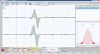 Figure 1c: Jaw jerk reflex: confirmed functional symmetry.
 -
 Figure 1d: Mechanical silent period: balanced bilateral activation.


🧠 Three guiding questions (with essential answers)
- 1️⃣ What
- in what sense is the masticatory system a complex system (and not merely biomechanical)?
It is a system in which morphology (teeth/occlusion) and neurophysiological control (trigeminal system and central/peripheral networks) interact non-linearly: function emerges from the integration of components, not from isolated form.
- 2️⃣ Why
- why is “malocclusion” often an insufficient category from a functional and diagnostic standpoint?
Because “malocclusion” primarily describes a morphological asymmetry, which may not correspond to dysfunction: neuromuscular adaptations can preserve symmetry and functional performance even in the presence of evident discrepancies.
- 3️⃣ How
- how do electrophysiological tests change diagnosis and therapeutic strategy (from form to function)?
They introduce measurable criteria of symmetry and neuromuscular control (reflexes, evoked potentials, silent period), enabling function-based diagnosis and guiding therapies aimed at functional stability and relapse prevention.
If you already have an approved account, click on your profile icon and return to the Book Index to read the complete chapter.
To access the full content, you must sign in via LinkedIn and request approval.
- Heft MW, Fox CH, Duncan RP, «Assessing the Translation of Research and Innovation into Dental Practice», in JDR Clin Trans Res, 2019».
DOI:10.1177/2380084419879391
- «Exposure Science in the 21st Century. A Vision and a Strategy», National Research Council, Division on Earth and Life Studies, 2012».
ISBN: 0-309-26468-5
- Liu L, Li Y, «The unexpected side effects and safety of therapeutic monoclonal antibodies», in Drugs Today, 2014, Barcellona».
DOI:10.1358/dot.2014.50.1.2076506
- James Frederick Ferrier. Institutes of Metaphysic. 1854. (Internet Encyclopedia of Philosophy: Ferrier).
- Srivastava S. «Verifiability is a core principle of science», in Behav Brain Sci, Cambridge University Press, 2018».
DOI:10.1017/S0140525X18000869
- Evans M. «Measuring statistical evidence using relative belief», in Comput Struct Biotechnol J, 2016».
DOI:10.1016/j.csbj.2015.12.001
- Amrhein V; Greenland S; McShane B. «Scientists rise up against statistical significance», in Nature, 2019».
DOI:10.1038/d41586-019-00857-9
- Rodgers JL. «The epistemology of mathematical and statistical modeling: a quiet methodological revolution», in Am Psychol, 2010».
DOI:10.1037/a0018326
- Meehl P. The problem is epistemology, not statistics: replace significance tests by confidence intervals and quantify accuracy of risky numerical predictions. 1997.
- Sprenger J; Hartmann S. «Bayesian Philosophy of Science. Variations on a Theme by the Reverend Thomas Bayes», Oxford University Press, 2019».
- Wasserstein RL; Schirm AL; Lazar NA. «Moving to a World Beyond p < 0.05», in Am Stat, 2019».
DOI:10.1080/00031305.2019.1583913
- Boon M; Van Baalen S. «Epistemology for interdisciplinary research – shifting philosophical paradigms of science», in Eur J Philos Sci, 2019».
DOI:10.1007/s13194-018-0242-4
- Boon M. «An engineering paradigm in the biomedical sciences: Knowledge as epistemic tool», in Prog Biophys Mol Biol, 2017».
DOI:10.1016/j.pbiomolbio.2017.04.001
- Guven Y. «Scientific basis of dentistry», in J Istanb Univ Fac Den, 2017».
DOI:10.17096/jiufd.04646
- Smaglyuk LV; Voronkova HV; Karasiunok AY; Liakhovska AV; Solovei KO. «Interdisciplinary approach to diagnostics of malocclusions (review)», in Wiad Lek, 2019».
- Avivi-Arber L; Lee JC; Sessle BJ. Motor cortex neuroplasticity associated with dental occlusion. J Dent Res. 2015;94(12):1751–1759. doi:10.1177/0022034515596345
- Avivi-Arber L; Martin R; Lee JC; Sessle BJ. The Face Sensorimotor Cortex and its Neuroplasticity in Health and Disease. J Dent Res. 2019;98(11):1184–1194. doi:10.1177/0022034519865385
- Iwata K; Sessle BJ. Neural Basis of Orofacial Functions in Healt*