Main Page: differenze tra le versioni
Nessun oggetto della modifica |
Nessun oggetto della modifica |
||
| (47 versioni intermedie di uno stesso utente non sono mostrate) | |||
| Riga 1: | Riga 1: | ||
__NOTOC__ | __NOTOC__ | ||
<html> | |||
<style> | |||
/* ===== HERO (solo questa pagina) ===== */ | |||
/* blocco a destra vicino al sole, MA compatto */ | |||
.hero-subtitle-block{ | |||
margin: 18px auto 0; | |||
max-width: 1100px; | |||
text-align: right; | |||
padding-right: 170px; /* manopola: 110–170 */ | |||
} | |||
/* Index |Ψ>: oro, compatto */ | |||
.hero-psi{ | |||
font-size: 30px; | |||
font-weight: 500; | |||
letter-spacing: 0.04em; | |||
line-height: 1.05; | |||
color: #C9A24D; | |||
margin: 0; | |||
position: relative !important; | |||
left: 10px !important; /* ORIZZONTALE → destra (manopola) */ | |||
top: 60px !important; /* VERTICALE → allinea al sole (manopola) */ | |||
} | |||
/* tagline: subito sotto, leggermente “tirata” verso il sole */ | |||
.hero-tagline{ | |||
font-size: 18px; | |||
font-weight: 400; | |||
line-height: 1.1; | |||
opacity: 0.92; | |||
margin: 6px 0 0 0; /* distanza minima sotto Index */ | |||
transform: translateY(10px); /* manopola: 8–18 */ | |||
} | |||
/* stabilizza math */ | |||
.hero-psi .mwe-math-element, | |||
.hero-psi img{ vertical-align: middle; } | |||
/* Masticationpedia centrata */ | |||
.hero-header{ position: relative !important; } | |||
.hero-title{ | |||
position: absolute !important; | |||
left: 50% !important; | |||
top: 300px !important; | |||
transform: translateX(-50%) !important; | |||
text-align: center !important; | |||
margin: 0 !important; | |||
z-index: 3; | |||
font-size: 44px; | |||
} | |||
/* mobile */ | |||
@media (max-width: 768px){ | |||
.hero-subtitle-block{ | |||
text-align: center; | |||
padding-right: 0; | |||
} | |||
.hero-psi{ font-size: 26px; } | |||
.hero-tagline{ | |||
font-size: 16px; | |||
transform: none; | |||
margin-top: 6px; | |||
} | |||
} | |||
.hero-subtitle-block .hero-tagline{ | |||
position: relative !important; | |||
top: 50px !important; /* <-- QUESTA È LA MANOPOLA (alto/basso) */ | |||
outline: none !important; | |||
} | |||
</style> | |||
</html> | |||
<div class="homepage-layout"> | <div class="homepage-layout"> | ||
<div class="hero-header" style="position: relative;"> | <div class="hero-header" style="position: relative;"> | ||
| Riga 13: | Riga 93: | ||
<li>[[Masticationpedia_Ethical_and_Scientific_Board|Ethical Board]]</li> | <li>[[Masticationpedia_Ethical_and_Scientific_Board|Ethical Board]]</li> | ||
<li>[[Book_index|Book index]]</li> | <li>[[Book_index|Book index]]</li> | ||
<!-- <li>[[Masticationpedia Academy|Academy]]</li> --> | |||
<li>[[Our_network|Our network]]</li> | <li>[[Our_network|Our network]]</li> | ||
<li>[[Dashboard_Masticationpedia|Dashboard]]</li> | <li>[[Dashboard_Masticationpedia|Dashboard]]</li> | ||
| Riga 20: | Riga 102: | ||
</div> | </div> | ||
</div> | </div> | ||
<div class="hero-subtitle-block"> | |||
<div class="hero-psi">Index<math>|\Psi\rangle</math> </div> | |||
<div class="hero-tagline">An advanced clinical criterion</div><br><br> | |||
<h1 class="hero-title">Masticationpedia</h1> | <h1 class="hero-title">Masticationpedia</h1> | ||
</div> | |||
| Riga 31: | Riga 117: | ||
{{HeroSocialIcons}} | {{HeroSocialIcons}} | ||
{{HomepageCTA}} | |||
| Riga 43: | Riga 140: | ||
</a> | </a> | ||
<div class="tooltip-content-expert"> | |||
<strong>Apply via LinkedIn</strong><br> | |||
Sign in with your LinkedIn profile to immediately create and activate | |||
your Masticationpedia account.<br><br> | |||
LinkedIn identification is used to maintain | |||
a recognizable, accountable, and coherent scientific community | |||
aligned with the nature of the project.<br><br> | |||
After logging in, you will be able to access reserved content | |||
using your MediaWiki session | |||
(or by returning through the same LinkedIn access).<br><br> | |||
Access is not linked to donations or any form of financial support. | |||
</div> | </div> | ||
</div> | |||
}} | |||
</div> | </div> | ||
| Riga 81: | Riga 166: | ||
<div class="chapter-content"> | <div class="chapter-content"> | ||
<span id="masticationpedia"></span> | <span id="masticationpedia"></span> | ||
<div style="max-width:1200px;margin:0 auto 40px auto;"> | <div style="max-width:1200px;margin:0 auto 40px auto;"> | ||
| Riga 99: | Riga 184: | ||
Clinical Network • NeuroGnathology • Prosthetic Rehabilitation | Clinical Network • NeuroGnathology • Prosthetic Rehabilitation | ||
</div> | </div> | ||
---- | |||
= 🧭 1. What is Masticationpedia = | |||
Masticationpedia is not a traditional encyclopedia, | |||
nor a content delivery platform, | |||
nor a professional network. | |||
It is a '''collaborative scientific and editorial laboratory''', | |||
built around a precise clinical objective: | |||
'''the construction of an integrated diagnostic criterion for clinical complexity —''' | |||
the <math>\Psi</math> Index.''' | |||
The project originates from a well-known clinical failure: | |||
many patients have suffered for years not because data were lacking, | |||
but because medicine lacked a coherent framework to interpret them. | |||
Masticationpedia exists to address this gap. | |||
The <math>\Psi</math> Index is not a ready-made algorithm, | |||
nor a commercial product. | |||
It is a model under construction, | |||
shaped through critical analysis of clinical cases, | |||
cross-disciplinary dialogue, | |||
and continuous revision of knowledge. | |||
For this reason, Masticationpedia does not grow by accumulation, | |||
but by coherence. | |||
It does not simplify complexity: | |||
It | it makes it readable. | ||
<blockquote> | <blockquote> | ||
'''🧠 From access to | '''🧠 From access to responsibility''' | ||
{{TooltipWide|2= | {{TooltipWide|2=Open access provides orientation, not participation.<br><br> | ||
When clinical complexity increases, | |||
reading alone becomes insufficient.<br><br> | |||
The construction of the <math>\Psi</math> Index requires:<br> | |||
• time,<br> | |||
If you | • methodological rigor,<br> | ||
• conceptual coherence,<br> | |||
}} | • and shared responsibility.<br><br> | ||
For this reason, Masticationpedia is organized in levels: | |||
reading precedes understanding, | |||
understanding precedes contribution, | |||
and contribution precedes recognition within the project.<br><br> | |||
Support — intellectual or economic — | |||
does not purchase content | |||
and does not guarantee roles.<br><br> | |||
It sustains the time, access, and continuity | |||
necessary to build a clinical criterion that is currently missing.<br><br> | |||
If you are looking for content, you may read.<br><br> | |||
If you are looking for shortcuts, this is not the place.<br><br> | |||
If you are willing to confront clinical uncertainty,<br><br> | |||
start from the [[Book index|Book Index]].}} | |||
</blockquote> | </blockquote> | ||
Masticationpedia is | |||
Masticationpedia is not designed to grow quickly. | |||
It is designed to remain coherent. | |||
Noise is excluded by design. | |||
---- | ---- | ||
<html> | <html> | ||
| Riga 134: | Riga 260: | ||
🔗 Contact us via LinkedIn<br> | 🔗 Contact us via LinkedIn<br> | ||
<span style="font-size: 0.9rem; font-weight: 400;"> | <span style="font-size: 0.9rem; font-weight: 400;"> | ||
Click <strong>Message</strong> on our LinkedIn page to | Click <strong>Message</strong> on our LinkedIn page to contact us directly | ||
</span> | </span> | ||
</a> | </a> | ||
| Riga 144: | Riga 270: | ||
</div> | </div> | ||
---- | |||
<div class="mp-readable" style="margin:26px auto 0; max-width:900px; padding:18px 20px; background:#ffffff; | <div class="mp-readable" style="margin:26px auto 0; max-width:900px; padding:18px 20px; background:#ffffff; | ||
| Riga 262: | Riga 395: | ||
---- | |||
<div class="mp-readable" style="margin:26px auto 0; max-width:900px; padding:18px 20px; background:#ffffff; | <div class="mp-readable" style="margin:26px auto 0; max-width:900px; padding:18px 20px; background:#ffffff; | ||
border-radius:14px; border:1px solid #e3e6ee; line-height:1.6;"> | border-radius:14px; border:1px solid #e3e6ee; line-height:1.6;"> | ||
<span id="projects"></span> | <span id="projects"></span> | ||
= 🚪 3. Projects | = 🚪 3. Ongoing Projects = | ||
<div class="mp-readable" style=" | |||
margin: 18px auto 0; | |||
max-width: 900px; | |||
padding: 18px 20px; | |||
background: #ffffff; | |||
border-radius: 14px; | |||
border: 1px solid #e3e6ee; | |||
line-height: 1.6; | |||
"> | |||
🧩 Masticationpedia projects exist because <b>some patients have suffered for years without a diagnosis</b>, | |||
not because their condition was invisible, but because medicine lacked the proper framework to see it. | |||
This is not a theoretical problem. It has already happened.<br><br> | |||
[[File:Dubai 2015 (2).png|left|220px|link=https://www.youtube.com/watch?v=7sB-EeOQL9Y]] | |||
Masticationpedia does not sell content and does not offer paid services.<br> | |||
If you share the need to build a diagnostic model capable of reading clinical complexity — | |||
<b>the Ψ Index</b> — you may contribute to the project with a donation.<br> | |||
The donation supports the costs of scientific and editorial work: | |||
research time, content review, technical infrastructure, and project continuity.<br> | |||
<b>You are not purchasing anything.</b><br> | |||
You are making possible a body of work that is currently missing.<br> | |||
If you share the need to build an integrated diagnostic criterion (<b>Ψ Index</b>), | |||
you may support the project with a donation. | |||
<html> | <html> | ||
| Riga 301: | Riga 445: | ||
text-decoration:none; | text-decoration:none; | ||
"> | "> | ||
❤️ Support | ❤️ Support paradigm progress | ||
</a> | </a> | ||
</div> | </div> | ||
| Riga 309: | Riga 452: | ||
</div> | </div> | ||
<div style="margin-top:18px; font-size:0.85em; color:#555; text-align:center;"> | |||
Masticationpedia is governed by a non-negotiable | |||
[[Act of Custody of Meaning]]. | |||
</div> | |||
Versione attuale delle 17:34, 23 gen 2026
Masticationpedia




Sign in with your LinkedIn profile to immediately create and activate your Masticationpedia account.
LinkedIn identification is used to maintain a recognizable, accountable, and coherent scientific community aligned with the nature of the project.
After logging in, you will be able to access reserved content using your MediaWiki session (or by returning through the same LinkedIn access).
Access is not linked to donations or any form of financial support.
Clinical Network • NeuroGnathology • Prosthetic Rehabilitation
🧭 1. What is Masticationpedia
Masticationpedia is not a traditional encyclopedia, nor a content delivery platform, nor a professional network.
It is a collaborative scientific and editorial laboratory, built around a precise clinical objective:
the construction of an integrated diagnostic criterion for clinical complexity — the Index.
The project originates from a well-known clinical failure: many patients have suffered for years not because data were lacking, but because medicine lacked a coherent framework to interpret them.
Masticationpedia exists to address this gap.
The Index is not a ready-made algorithm, nor a commercial product. It is a model under construction, shaped through critical analysis of clinical cases, cross-disciplinary dialogue, and continuous revision of knowledge.
For this reason, Masticationpedia does not grow by accumulation, but by coherence.
It does not simplify complexity: it makes it readable.
🧠 From access to responsibility
Open access provides orientation, not participation.
When clinical complexity increases, reading alone becomes insufficient.
The construction of the Index requires:
• time,
• methodological rigor,
• conceptual coherence,
• and shared responsibility.
For this reason, Masticationpedia is organized in levels: reading precedes understanding, understanding precedes contribution, and contribution precedes recognition within the project.
Support — intellectual or economic — does not purchase content and does not guarantee roles.
It sustains the time, access, and continuity necessary to build a clinical criterion that is currently missing.
If you are looking for content, you may read.
If you are looking for shortcuts, this is not the place.
If you are willing to confront clinical uncertainty,
start from the Book Index.
Masticationpedia is not designed to grow quickly. It is designed to remain coherent.
Noise is excluded by design.
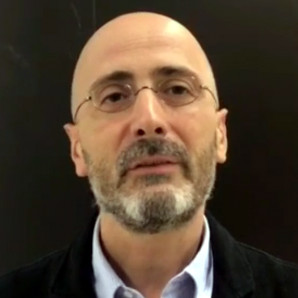
🏥 2. Approved Members
Some approved members from LinkedIn profiles who are going to form the Scientific community





🚪 3. Ongoing Projects
🧩 Masticationpedia projects exist because some patients have suffered for years without a diagnosis,
not because their condition was invisible, but because medicine lacked the proper framework to see it.
This is not a theoretical problem. It has already happened.

Masticationpedia does not sell content and does not offer paid services.
If you share the need to build a diagnostic model capable of reading clinical complexity —
the Ψ Index — you may contribute to the project with a donation.
The donation supports the costs of scientific and editorial work:
research time, content review, technical infrastructure, and project continuity.
You are not purchasing anything.
You are making possible a body of work that is currently missing.
If you share the need to build an integrated diagnostic criterion (Ψ Index), you may support the project with a donation.
Masticationpedia is governed by a non-negotiable Act of Custody of Meaning.