Introduction/Landing/Malocclusion Rethought: differenze tra le versioni
Creata pagina con "__NOTOC__ {{DISPLAYTITLE: Malocclusion Rethought — Occlusal Dysmorphisms}} <!-- HERO --> <div style="background:#f2f7ff; border-radius:14px; padding:28px; text-align:center; margin-bottom:22px; border:1px solid #e9eef7;"> <h1 style="margin:.2rem 0; font-size:2.2rem; line-height:1.2;">Malocclusion Rethought</h1> <p style="font-size:1.08rem; opacity:.85; margin:.5rem 0 1.2rem;"> From “Malocclusion” to a broader paradigm: <b>Occlusal Dysmorphisms</b>. </p>..." |
(Nessuna differenza)
|
Versione attuale delle 13:59, 19 set 2025
Malocclusion Rethought
From “Malocclusion” to a broader paradigm: Occlusal Dysmorphisms.
👉 Read the full chapter
Malocclusion Rethought modifica modifica sorgente
"Malocclusion" (from Latin malum = bad) traditionally labels an improper “closure” of teeth. Yet modern clinical science shows that function cannot be reduced to mechanics alone. Electrophysiological findings (e.g., symmetry in motor-evoked potentials, jaw-jerk, and silent period) often reveal balanced trigeminal dynamics even in the presence of occlusal discrepancies.
This challenges the conventional label “malocclusion” and supports a broader concept: Occlusal Dysmorphisms. Within a complex-systems view of mastication, neuromuscular coherence can coexist with occlusal asymmetries, urging interdisciplinary diagnostics that integrate occlusion with neurophysiology to achieve stable outcomes and reduce relapses.
-
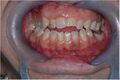 Fig. 1a: Open bite and crossbite case (occlusal view).
 -
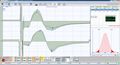 Fig. 1b: Bilateral MEP symmetry in masseter muscles.
 -
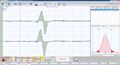 Fig. 1c: Jaw-jerk reflex indicating functional symmetry.
 -
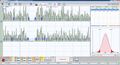 Fig. 1d: Mechanical silent period (balanced neuromuscular dynamics).


📑 References
- Interdisciplinary diagnostics of malocclusions — Smaglyuk et al., 2019
- Anterior open bite review — Reichert et al., 2014
- Early crossbite protocols — Miamoto et al., 2018
Masticationpedia — open scientific platform for dentistry and medicine.